
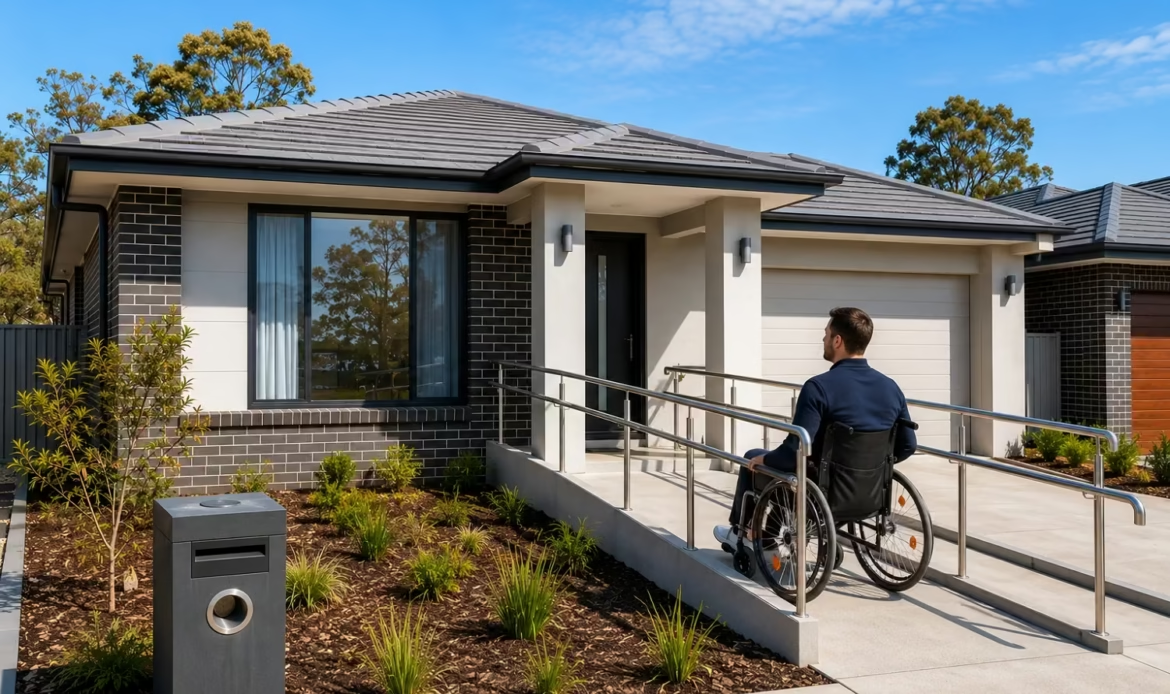
If you have been searching for the right support for your loved one with disability, you would have come across the term specialist disability accommodation in Sydney at some point. But here is what most families don’t fully understand — the real value of SDA goes so much deeper than just having a roof over someone’s head.
Yes, it is a home. But it is also so much more than that.
It is very true that many families focus only on the physical setup of the space — ramps, widened doorways, accessible bathrooms. And those things absolutely matter. But there are layers of benefit that quietly change lives in ways that families often miss until they are already living them. So, let us talk about those.
Specialist Disability Accommodation in Sydney Is About Independence, Not Just Access
There is a difference between a space that is accessible and a space that is empowering. Specialist disability accommodation in Sydney is built with the second goal in mind.
When your family member has a home that is designed around their actual needs — not retrofitted, not “good enough” — they can do more on their own. They can move through their space with confidence. They can have a routine that doesn’t rely on constant assistance for basic tasks.
This independence is not just practical. It is deeply connected to mental wellbeing, self-esteem, and a sense of dignity. And families often underestimate just how much this shift can change the entire dynamic at home — for the participant and for them.
The Emotional Relief for Families Is Real (and Rarely Talked About)
Yes, sometimes people think that SDA is only for the participant’s wellbeing. But in reality, it has a profound impact on their families too.
Carers — parents, siblings, partners — can carry so much stress. They perhaps need to keep constant monitoring for their loved one and that physical strain of supporting someone is obviously not a matter to take lightly. This is especially true if the home environment is not set up properly. That is why, many families reach their limits well before they would admit it to anyone.
SDA gives families permission to breathe. When a participant is in an environment which is practically designed for them (with the right support and assistance), families of the person can be relieved from a state of constant alert. They can visit, be present, and actually enjoy time with their loved one rather than spending every moment in anxiety.
That emotional relief is one of the most underrated benefits of having the right SDA.
It Connects People to the Right Support Workers
Here is something that doesn’t get discussed enough. The design of an SDA home can actually affect the quality of support a participant has access to.
Purpose-built homes are much easier for support workers to work in. There is enough space to move, to assist, to use equipment safely. This means support workers can do their jobs well — and, importantly, they are less likely to burn out or make errors.
When a support worker is comfortable and safe in their environment, the participant benefits. It is as simple as that.
SDA environments can also be set up to integrate assistive technology — call systems, automated doors, smart home features — which means participants can have more control over their own day without always having to wait for someone else to act.
Location Actually Matters More Than Most Families Realise
We often think about SDA in terms of the building itself. But the location of specialist disability accommodation in Sydney is a benefit that families frequently overlook in the early stages.
Sydney is a large city with very different communities across its suburbs. Access to transport, proximity to allied health services, closeness to social networks, green spaces, cultural communities — all of this shapes a participant’s quality of life in ways that go far beyond the four walls of their home.
A well-located SDA property means a participant can stay connected. They can access therapy without a long commute. They can have visitors who actually live nearby. They can be part of a neighbourhood, not isolated from one.
For many participants, this is the difference between a life of inclusion and one of quiet withdrawal — and it is a factor which doesn’t show up on a floor plan.
SDA Can Reduce Long-Term NDIS Plan Costs
This is a very practical benefit that families often miss because the upfront numbers for SDA can seem high. But if you look at the full picture, the economics can actually work in a participant’s favour.
When someone is in the right SDA property — one that suits their disability type and support intensity — they often need less support hours overall. The environment does some of the work. Good design, assistive technology, and appropriate layout mean that a participant can complete tasks more independently, which reduces reliance on paid support.
Social Connection Is Built into the Design
Not all SDA properties are the same. Some participants live alone in self-contained SDA homes. Others live in shared SDA arrangements with a small number of other people. Each has its benefits, but shared SDA in particular can be very powerful for social wellbeing.
In reality, loneliness is one of the biggest challenges for people with disability. And it is one of those things which doesn’t always show up in a support plan, but quietly affects everything — mood, motivation, mental health, physical health.
Shared SDA, done well, can create genuine community. Participants can have neighbours who understand their experience. They can share meals, watch something together, have company on a hard day. It is not forced — but the opportunity is there in a way it simply is not in an isolated setting.
SDA Supports Long-Term Planning and Stability
One of the things families worry about most is what happens next. What happens as a participant ages? What if their needs change? What if a primary carer is no longer able to help?
SDA is built for the long term. It provides a stable, consistent base that can adapt as needs evolve. Modifications can be made. Support arrangements can shift. But the home itself remains — a constant, reliable environment that the participant can truly call their own.
How ZedCare Ability Can Help Participants
At ZedCare Ability, we understand that finding the right SDA property is so much more than just a housing decision — it is about building a life. We work closely with participants and their families to understand what really matters: the right location, the right design, the right level of support, and the right community fit.
Our team has experience in helping participants access SDA funding through the NDIS, understand their options, and make informed choices that suit their goals and their disability support needs. We believe every participant deserves a home that works for them — not one they have to work around.
FAQs
Q) What is Specialist Disability Accommodation (SDA)?
SDA is housing designed for those people who have significant functional impairment or need very high support to maintain their daily life.
Q) Who can access SDA funding?
SDA funding is currently available to eligible NDIS participants whose housing needs meet specific criteria set by the NDIS.
Q) Can SDA help increase independence?
Yes. Many SDA homes have accessibility features which support greater independence for the participants in their daily activities.
Q) Are SDA homes only for people with physical disabilities?
No. SDA is also suitable for those participants with cognitive, sensory, or psychological impairment who have different high support needs. It also depends on their individual circumstances and eligibility.
Q) Why is choosing the right SDA property important?
A suitable property can support safety, comfort, independence, social connections, and long-term wellbeing.