
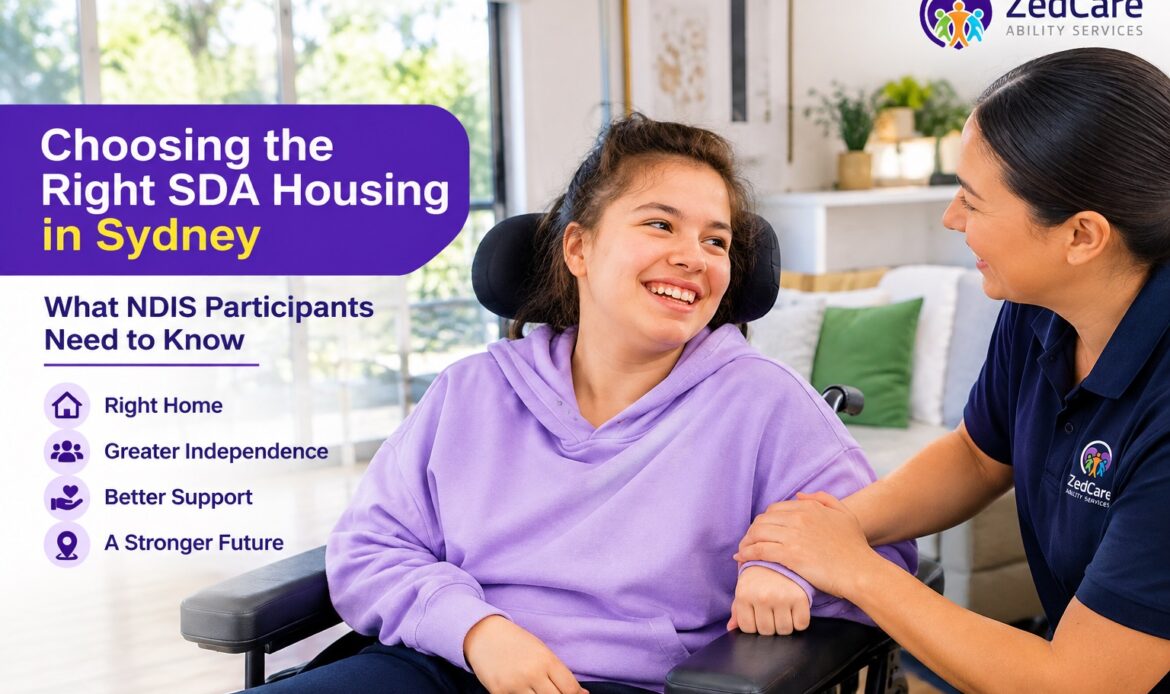
If you are a NDIS participant in Sydney, it becomes very important to have a home which suits your needs, gives you a good level of independence and offers you the right support around you. For some eligible participants, specialist disability accommodation in Sydney can be a suitable option, especially if you have very high support needs or extreme functional impairment.
SDA is not simply a house with a few accessible features. But in reality, it is a type of specialist home with specifically designed features. These homes can support your disability needs and help your other supports work more safely and effectively.
So, when it is about choosing such accommodation for you, you will need to consider many things like your own needs, routines, preferences and goals. If an SDA home is proved ‘right’ for one person, it doesn’t mean that it can be a ‘right’ option for you too.
That is why you need some really useful and clear information before you take any decision. Here in this blog, we will share some of the important information which you should need to be aware of before selecting a SDA home for you or your loved one.
What Is SDA Housing?
SDA stands for Specialist Disability Accommodation. It is a type of housing for eligible NDIS participants who have extreme functional impairment or very high support needs.
An SDA home can be an apartment, house, villa, duplex, townhouse or group home. It can also have different design categories based on the needs it can support. These categories include improved liveability, robust, fully accessible and high physical support.
The important point is that SDA is about the home itself. Your SDA funding is for the specialist housing component. It is separate from many other supports that you may have in your NDIS plan.
For example, you may have other funding for support workers or other home and living supports. Your rent and normal household costs are also separate from SDA funding. You will usually have a reasonable rent contribution and other day-to-day costs, such as electricity.
Check Your SDA Eligibility First
Before you look at properties, you should have a clear idea of your SDA eligibility and funding.
Not every NDIS participant has SDA funding. The NDIS has specific eligibility rules, and SDA is generally for people with extreme functional impairment or very high support needs. Your plan and your home and living assessment can have an important role in this process.
If you already have SDA funding, check the details of your plan. You should know what type of SDA is suitable for your needs and what funding is available.
If you are not sure, you can speak with your support coordinator, recovery coach or NDIS contact. It is much better to have this information first than to select a property that is not suitable for your funding.
Know Which SDA Design Category Suits You
This is one area you should not overlook.
Different SDA homes have different design categories. An improved liveability home may have features that support people with sensory, intellectual or cognitive needs. A fully accessible home has a high level of physical access. A robust home has strong and durable features, while high physical support homes can have features such as ceiling hoists, backup power and home automation.
You should not select a home only because it looks modern or attractive.
You must ask yourself:
- Are the doorways suitable for your mobility needs?
- Is the bathroom suitable for your daily routine?
- Is there enough space for your equipment?
- Are the kitchen features suitable for you?
- Is there suitable access from the entrance?
- Are there features that support your personal safety?
- Will the home suit your needs as they change?
Your answers can help you identify the type of home that has the best fit for you.
Location Matters More Than You May Think
A beautiful property may not be the right choice if its location makes your daily life difficult.
When you look at SDA housing in Sydney, check the area around the property as well as the property itself.
Think about your access to public transport, shops, medical services, family, friends, community facilities and your regular support services. If you have support workers, the location can also have an effect on their ability to provide support.
You should also think about the area at different times of the day. A place that seems suitable on a short visit may have traffic, noise or access issues that you did not notice at first.
Your home should be part of your wider life, not an isolated place that simply meets a housing category.
Check the Home Is Actually Enrolled as SDA
This is a very important point.
A property that has accessible features is not automatically an SDA property. The dwelling must meet the relevant requirements and be enrolled by the NDIA as an SDA dwelling. Design certification alone does not mean that a property will be enrolled as SDA.
So, ask the provider for clear information about the property.
You can ask:
- Is this dwelling enrolled as SDA?
- What is the building type?
- What is the SDA design category?
- What features are included?
- Is the property suitable for my approved SDA funding?
- Can I see the relevant property information before I agree?
Yes, all these are simple questions, but they can be really useful for you to avoid a poor choice.
Look at the Provider, Not Only the Property
A good property is important, but the provider is also important.
If you are searching for an NDIS SDA provider in Sydney, check if the provider is registered for SDA. SDA providers must be registered NDIS providers, and the homes they offer must meet the relevant enrolment requirements.
You can also look at the provider’s communication, reputation and approach.
Ask how easy it is to contact them. Ask how they handle repairs and property concerns. Ask who you can contact if you have a problem. You can also ask how they work with your other support providers.
You can check here if you want to know how to get the most suitable NDIS care provider in Sydney
Think About Your Independence and Privacy
Your home should support your independence, privacy and personal choices.
You may have support workers or other people who visit your home. That does not mean you should lose control over your personal space.
Ask how the home supports privacy. If the property is shared, ask how private areas and shared areas work. SDA homes often have a small number of residents, with participants usually having their own bedroom, although arrangements can vary.
You should also have a clear idea of who may enter your home and for what reason.
Your comfort, privacy and personal preferences should have a place in the decision.
Compare More Than One Option
You do not have to accept the first property you see.
If you have a choice, compare several options. Look at the location, property type, design category, features, costs, provider, agreement and access to your usual services.
You can use the NDIS SDA Finder if you have SDA funding. The NDIS states that you can search for vacancies by location, building type and maximum price per year.
You can also ask your support coordinator or other trusted people for suitable options.
A simple comparison can make your decision much easier.
Know Your Rights and Choices
You should have information about your housing options and the provider you choose.
The NDIS states that participants have choice about where they live and who provides their SDA supports.
That means your voice matters. If you have concerns about a provider, agreement or property, ask questions and seek suitable advice. You can also use official NDIS information and provider search tools to check details.
FAQs
What is SDA housing?
SDA (Specialist Disability Accommodation) is specially designed housing for eligible NDIS participants with extreme functional impairment or very high support needs. SDA homes may include apartments, houses, villas, duplexes, townhouses and group homes.
Who is eligible for SDA housing?
SDA is generally available to NDIS participants who meet specific eligibility requirements related to extreme functional impairment or very high support needs. Participants should check their NDIS plan and home and living assessment to understand their eligibility and approved funding.
What are the different SDA design categories?
SDA homes are available in different design categories, including Improved Liveability, Robust, Fully Accessible and High Physical Support. The right category depends on your individual disability-related needs, daily routines and level of support.
Is every accessible home an SDA property?
No. A property having accessible features does not automatically make it an SDA dwelling. The home must meet the relevant requirements and be enrolled as SDA by the NDIA. Participants should confirm the property’s SDA enrolment, design category and suitability for their approved funding before making a decision.
What should I consider when choosing SDA housing in Sydney?
Consider more than the property itself. Look at the location, accessibility, design category, features, privacy, independence, costs, nearby services and your future needs. Access to public transport, medical services, shops, family, community facilities and support workers can also be important.
How can I choose the right SDA provider?
When choosing an SDA provider, check that the provider is registered for SDA and consider their communication, reputation, maintenance and repair processes, responsiveness and approach to working with your other support providers. Comparing several providers and properties can help you make a more informed choice.
Can NDIS participants choose where they live and their SDA provider?
Yes. NDIS participants have choice regarding where they live and who provides their SDA supports. Before agreeing to a property or provider, participants should ask questions, understand the agreement and seek appropriate advice if they have concerns.