
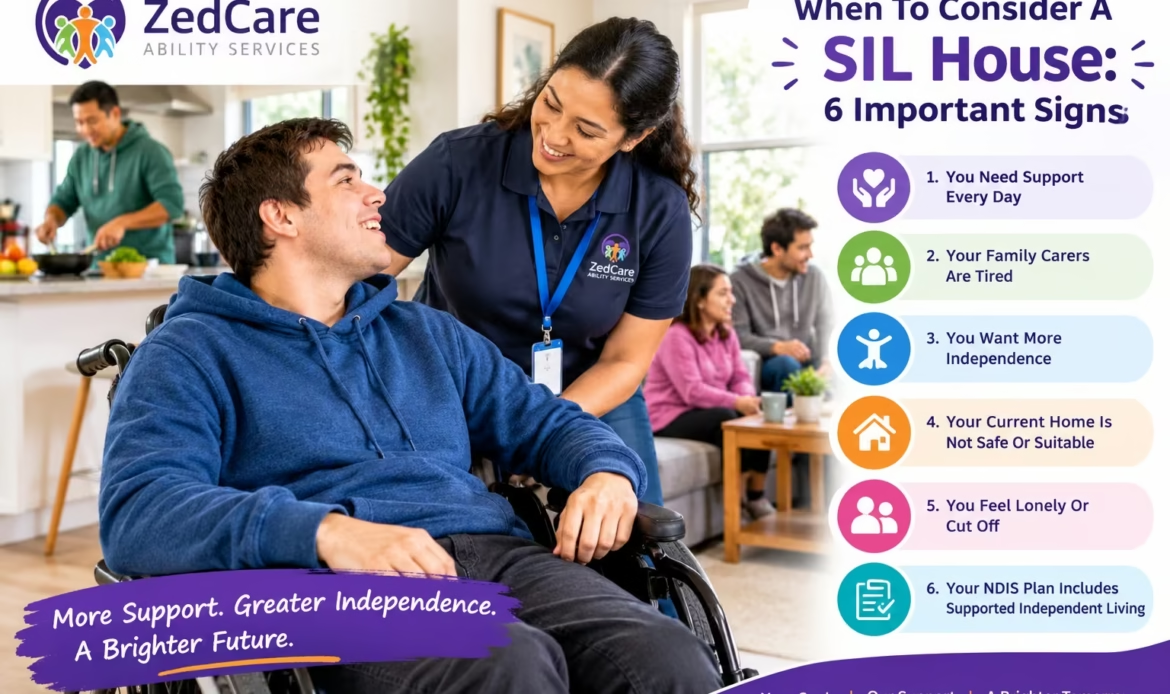
If you are a person who is living with a disability, it is quite natural for you to ask if your current home still suits you. A SIL house, which means Supported Independent Living, gives you your own space and trained staff who are there when you need them.
Yes, we know, right living arrangement becomes a very important decision when you as a NDIS participant want to live a more independent and comfortable life. With age, your needs, goals, and daily routines is very likely to change. That is why getting the help of an additional support can become almost necessary for your everyday activities.
With the right support, you can develop new skills, make your own choices, and obviously get much bigger confidence in your daily life.
Here, in this blog, we will talk about 6 important signs which indicate that it may be time to talk with a registered NDIS provider in Sydney. If you understand these signs, it can help you know your options well. So, discuss your needs with your support network, and decide first: if Supported Independent Living could be the right choice for you.
What Is A SIL House?
A SIL house is a shared home where a small group of people live together. Here, support workers visit them and assist them with various tasks like cooking, personal care and medicine.
It is not like a hospital or a care ward. It is your home, and you will have your own bedroom. Generally, the NDIS pays for the support you receive, but not for your rent or food.
Sign 1: You Need Support Every Day
Many people just need a little support each week. However, if you feel that you now need more aid for your daily routine activities like meal preparation, showers, dressing or medicine management than before, SIL house can be a good option for you.
Support in such a home is always close by, which would give you a steady routine. You will not have to wait for a visit or a phone call.
Sign 2: Your Family Carers Are Tired
To most of us, family is the first place for care. That is why many parents or partners take on this role for years. It is very true that love can be strong and the body can still be tired. Quite often, it happens that a carer gets ill or simply runs out of energy. If this is the case for your family, a SIL house will give them rest and give you skilled support.
Sign 3: You Want More Independence
Maybe you are a young adult and you want to live like your friends. You may want to choose your own meals, set your own times and learn new skills. A SIL house is a good fit for this. Veteran support staff will teach you to cook, clean and manage money at your own pace. Yes, we know, it takes time, but obviously it is very rewarding.
Sign 4: Your Current Home Is Not Safe Or Suitable
Look around your home. Are the doorways too narrow? Is the bathroom hard to use? Have you had falls or near misses? Obviously, safety comes first. Some SIL houses have ramps, wide halls, rails and other fittings which are built for your needs. Besides this, staff are trained to respond fast if something goes wrong.
Sign 5: You Feel Lonely Or Cut Off
Loneliness is a silent trouble these days and it is missed. If you are mostly spending your days alone or you find it hard to meet someone, your mood can be down.
If you live in an SIL house you will be sharing with housemates. They might become your friends. You will be able to have lunch or dinner with them, see a movie or go out together. Most of them take a little while to get used to but most of them settle down well.
Sign 6: Your NDIS Plan Includes Supported Independent Living
As a NDIS participant, it is always a good idea check your NDIS plan. If there is a provision of moving out or living on your own mentioned as your NDIS goal, you can get approved funding for SIL house. If you are not sure of it, you can always ask your fund manager or support coordinator to add it.
The NDIS will always look at your needs, your goals and the supports you have now. Your support coordinator can give you advice here. To avoid delays, you should begin the application process early.
How To Choose The Right Provider
The provider you pick will shape your daily life, so take your time. Look for a registered NDIS provider in Sydneywhich has clear policies, trained staff and a good record. You should visit the house at least once. Meet the staff and the other residents. Ask how they plan roster changes and what would happen in an emergency.
Here are a few points you should check:
- The provider is listed with the NDIS Quality and Safeguards Commission.
- Staff have the right checks and training.
- The house is close to shops, transport and your family.
- You have a say in who lives with you.
- You can have visitors and keep your own routine.
It is also fine to ask for a trial stay. Just as you would test a pair of shoes before you buy them, you should test a home before you commit.
How ZedCare Ability Services Can Support You
We understand that changing home can be a very big step. That is why at ZedCare Ability Services, our team will discuss your plans with you and your family, go through the different stages in simple language and try to find housemates and staff that are right for you and your personality.
Being a registered NDIS provider in Sydney, we abide by all NDIS regulations and always respect your preferences. If you believe the SIL house could be suitable for you, reach out to us for a caring discussion. There are no obligations, and feel free to ask as many questions as you want.
FAQS
Who can get SIL funding?
SIL funding is given to the NDIS participants. However, not all participants can have it. Mostly those NDIS participants who have high support needs and SIL provision mentioned their NDIS plan can avail the funding for it.
Will I have my own room?
In most SIL house, you will get your own room. Here, you can have your private bedroom and some shared spaces as well.
Can my family visit me?
Yes, they can. A good SIL home provider will encourage visits from your family and friends. Besides, they will respect your privacy too.
Is a SIL house the same as aged care?
No. you must remember that these homes are for adults with disability, not for any normal aged persons. It is fully funded through the NDIS.
How long does it take to move in?
It depends on your plan and on the house vacancies. It may take a few weeks or a few months.