
Daily life is full of small tasks, such as getting out of bed, making a cup of tea or having a shower. Yes, these tasks are simple to most of us. However, for a person who has a disability, all these simple-looking tasks can be tough to perform. Here, they need the right aid to make a very big difference in their life. So, if you are a carer, a family member or a person who wants to set us as register NDIS provider in Sydney, this guide is for you.
In this blog, we will talk about five useful aids for the people with disability and how they support in their different daily activities.
But before we start, we need to remember that there is no single aid which would suit every person in the same way. A device that proves to be good for one person may not be that useful to another person with disability.
Thus, it would be a good task to conduct an assessment from an occupational therapist before you go on to buy such aid. They will check your home condition, your disability parameter and your goals. Then they will tell you which item(s) would be the best-suited for your needs.
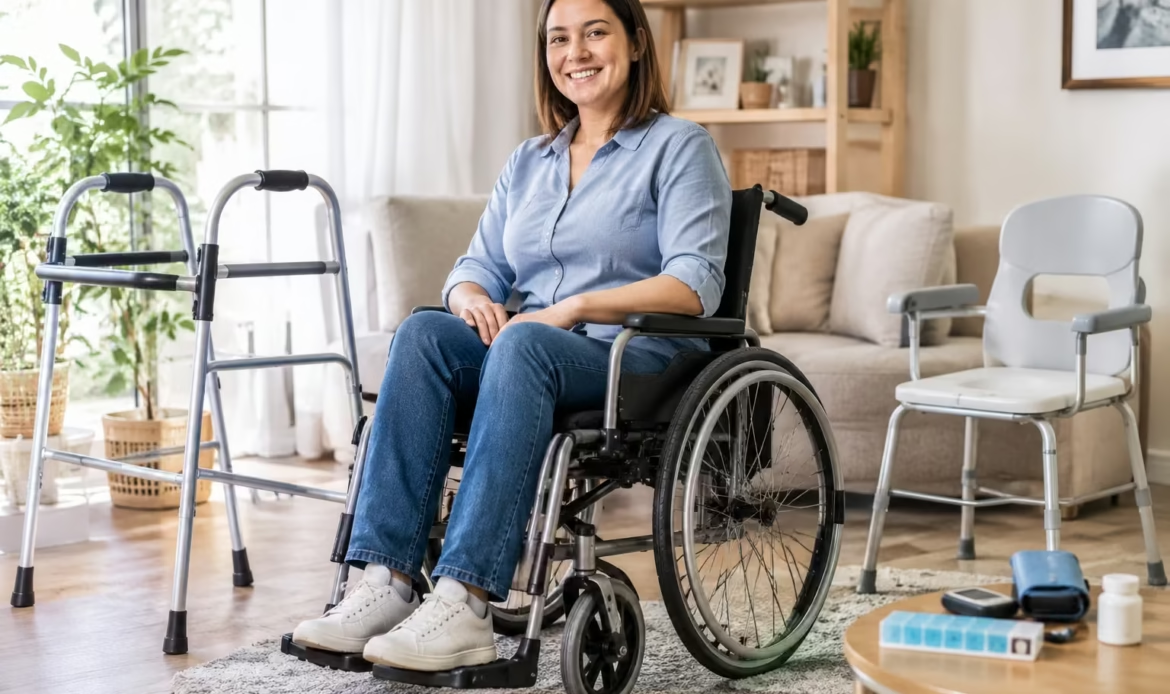
Mobility Aids (Walking Sticks, Frames and Wheelchairs)

Mobility is the first thing which most people would think of. For people with minor to moderate mobility issues, a walking stick would give them light support, and a walking frame would offer more balance.
For people with major mobility issue, a manual or power wheelchair will possibly the best option. It will not only help them moving in their house, but will also prove convenient to cover longer distances outside.
Yes, the right choice also depends on your strength, your balance and the type of surface you use every day.
Here are a few points which you need to check first:
- The seat height and width need to be well fitted with your body. A poor fit can cause back pain.
- You should test the aid both in both indoors and outdoors.
- Know the actual weight before, because a heavy frame will generally be hard to lift into a car.
Quite often, many people choose a device on just its look. Obviously, comfort and safety should come first.
Bathroom Aids (Shower Chairs, Grab Rails and Raised Toilet Seats)
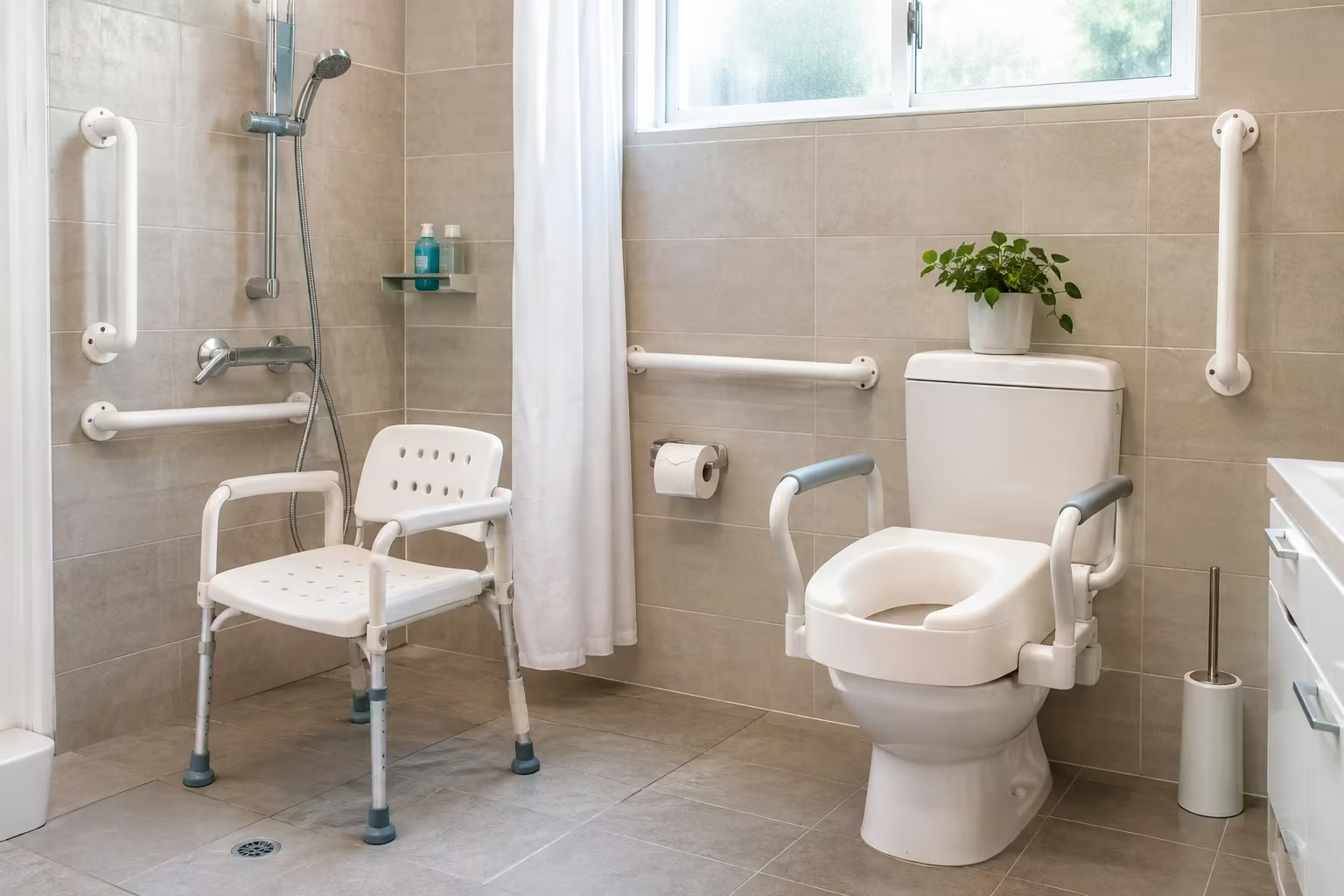
The bathroom is actually one of those places where falls are most common. This is mostly because of wet, slippery floor and the space being small. Here, a shower chair will let you sit down.
Besides, a grab rail will give you a firm grip, and a raised toilet seat will make it easy for you to stand up.
However, grab rails must be fixed to the wall by a qualified person. A rail that is just stuck on with weak glue is probably not safe.
Adjustable Beds and Pressure Care Cushions
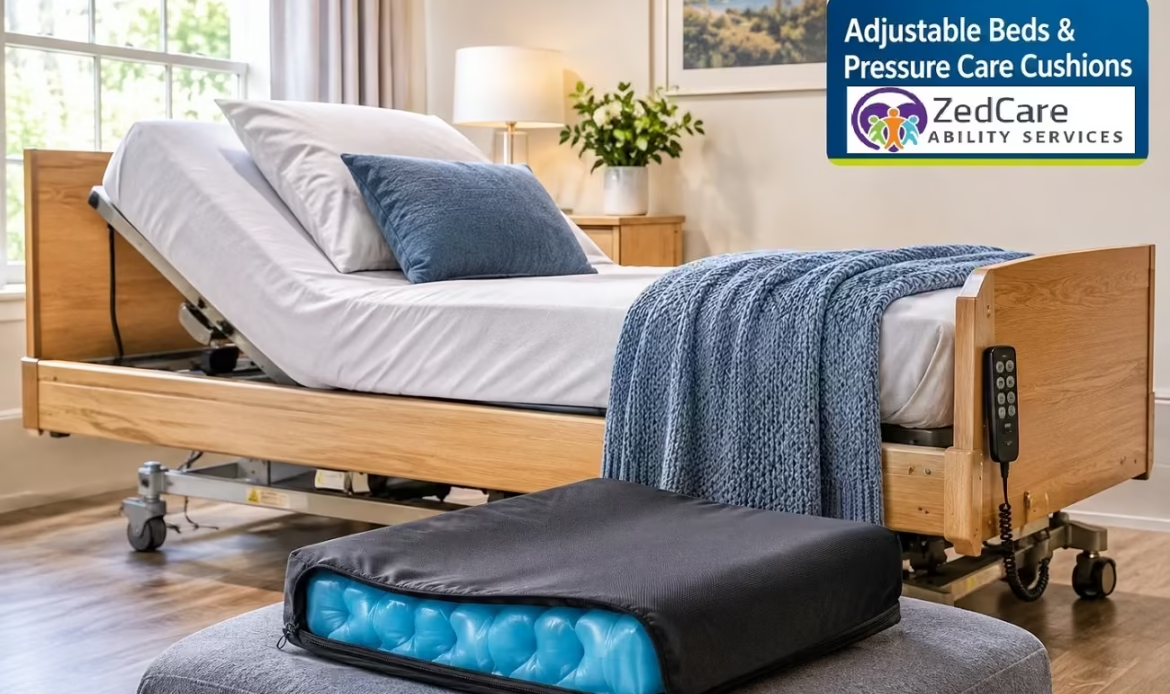
A good night of rest is important for your health. An adjustable bed here can let you raise your head or your legs at the touch of a button. This is a good option for a person with mobility issue as this would ease the strain on his/her back and make it easier to get in and out.
A pressure care cushion is a smart choice for a person who sits for many hours, as it will lower the risk of skin sores.
Skin sores can become serious very fast. That is why you should ask a nurse or a therapist to check your seating and bedding on a regular basis, especially if you are on in-home care.
Kitchen and Eating Aids

Yes, most of us like cooking and eating. It brings joy to us. But cooking something on your own also has a separate feeling. For this, you can use several items like:
- built-up cutlery
- non-slip plates
- jar openers
- one-handed chopping boards
Most of these are usually cheap and simple for a person with disability to use.
Besides that, light pots with two handles are generally safe for a person who has a weak grip.
Communication Aids
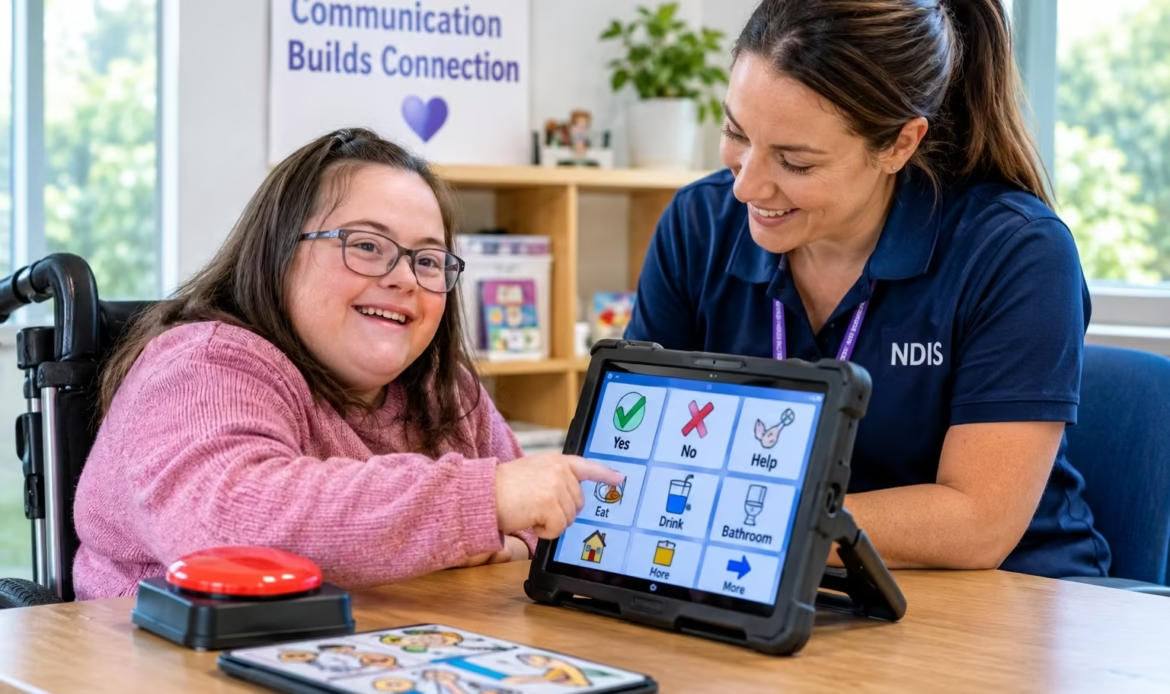
Communication is a basic need. Hearing aids, speech devices, picture boards and tablets with special apps – all come in this group. These aids actually give a voice to people who cannot speak properly. With these, they can make phone calls and video chats too.
Yes, these devices can cost a bit high. So, the NDIS may fund them when they are reasonable and absolutely necessary for a person with hearing disability.
But before you choose one, a speech pathologist is the right person to consult and test the options.
How the NDIS May Fund Your Aids
Assistive technology is generally funded when it is related to your disability, good value for money and likely to be effective. Yes, your core budget will support the cost of any low-cost items (that are often bought). But for a costly item, you need a quote and a report from a therapist.
Yes, the rules can change, so you should check the NDIS website or ask your planner before you spend any money.
Why Aids Matter in Disability Support Services and When You Register NDIS Provider in Sydney
If you plan to register NDIS provider in Sydney, you should know these aids very well. Obviously, the NDIS participants (who are mostly new) will ask you many questions related to the service, and they will expect clear and honest advice from you.
Besides, the providers need to meet the NDIS Practice Standards, which are checked by the NDIS Quality and Safeguards Commission. Here, if you have profound knowledge of different aids, it will be a real strength for your audit as well as in your daily care.
In good disability support services, ‘person’ and ‘care’ come first more than anything. You need to listen the client, need to respect their choice. Moreover, you should review each aid and its utility when their needs get changed.
How ZedCare Ability Services Can Assist as a Registered NDIS Provider in Sydney
ZedCare Ability Services is a reputed registered NDIS provider in Sydney, so our team knows how the system works from the inside. Our exerts will sit with you, hear what you have to say and explain your best options in plain words.
Here is what we bring to you:
- A friendly talk about your goals and your daily routine, so that you get the right aid
- A link to trusted therapists for assessments and quotes
- A clear view of the way your plan funds aids and support
- Warm and practical disability support services at home and in the community
Yes, we know it is never that easy to pick the right aid on your own. That is why when we are with you, you do not have to. Reach out to ZedCare Ability Services today, and we will be glad to start with a simple chat.
FAQs
Which aid is the most important one?
It actually depends on your needs. An occupational therapist is the best person here to tell you what would be best for you.
Will the NDIS pay for my aids?
Yes, in many cases where the item is reasonable in price and is absolutely necessary for your daily routine activities.
Do I need an assessment before I buy?
It is mostly not needed for low-cost items. However, it is wise to have an assessment before you buy.
How often should I check my aids?
Try to check them on a regular basis, and again when your needs have changed.
Can a provider advise on aids?
Yes, an NDIS provider such as ZedCare Ability Services can guide you and link you with the right therapist.