
It is very true that ‘trauma’ can put a deep impact in a person’s life. It can affect his/her sleep, trust, routine, confidence, relationships, and basic day to day stability. For some people, the impact is mild and the effect stays with then for little time, but for some others it can stay for much longer and puts a strong effect on their home life, social life, and personal goals.
In reality, trauma recovery cannot be achieved with a single appointment or by just with one simple answer. It is often achieved by a steady support, a safe routine, and obviously, with the right people around you.
This is where the NDIS service can bring you the real value. It is very true that the NDIS is not a medical system and it is not some kind of substitute for clinical or mental health care. But a right NDIS support can stand beside those persons who want to build more stability and independence in their everyday life.
Here the NDIS itself says it works alongside health, housing, education, family, community, and mental health treatment services, not in place of them.
How NDIS Services in Sydney Can Support Daily Stability
A stable routine has a very big place in trauma recovery. If a person has chaos all around them, recovery can be much harder. NDIS support can help create order where life has become too heavy. These supports are generally included by support at home, help to attend appointments, help to reconnect with community life, and help to build daily skills at a pace that suits the person.
For some people, support at home has a lot of value. A calm and respectful worker can help a participant keep the home in better order, keep appointments on track, and make the week less stressful. For others, social support has more value. They may need gentle help to go out, join a group, rebuild trust, or spend time in safer spaces outside the home.
If you look at trauma recovery in a broad way, you can see that safety, routine, and trust are not small matters. They are often the base of progress. This is one reason NDIS services in Sydney can be so useful for participants who need more than clinical care alone.
Why the Right NDIS Provider in Sydney Has a Big Place in Trauma Recovery
Not every provider will be the right fit. A person may have funding, but the real value comes from the quality of the support relationship. Trauma can leave a person very cautious, and that is understandable. Trust may be slow. Comfort may be slow. Confidence may be slow too.
The NDIS gives participants choice and control, and that has a lot of importance here. A participant can choose who has a place in their support team. They can also change providers if the fit is not right. The NDIS itself says participants should take the time they need, meet providers, build a good relationship, and move on if they are not happy with the support.
A good NDIS provider in Sydney will usually have respect for the person’s pace, clear communication, proper boundaries, and a service style that has kindness and consistency. You do not need pressure in a trauma recovery plan. You need clarity, calm support, and people who listen.
Recovery Coaches Can Have a Strong Role
For participants with psychosocial disability, a recovery coach can have a very useful role. This support is there to help a person take more control of life, build resilience, plan supports, and stay connected to help at times of higher need. That can matter so much for a person whose trauma has had a strong effect on day-to-day life.
A recovery coach is not there to replace a therapist. But he or she can help the participant connect the pieces of life together. If a person has many supports, mixed needs, and periods of instability, this kind of support can bring more structure. In general, that can reduce confusion and help the participant have a clearer path.
What to Ask From an NDIS Provider in Sydney After Trauma
It is very true that support quality has a direct effect on progress. So, before a participant says yes to a provider, a few practical questions can help.
You can ask them various relevant stuff such as – how their staff manage any adverse situation, how communication is kept clear, how changes in support are managed, and what happens if a worker is not the right fit.
You can also ask them about their privacy policies respected and how a participant can raise concerns. The NDIS advises participants to have clear communication and a service agreement, which can make expectations easier for both sides.
If it is for trauma recovery, you may not get a fancy answer for it as ‘trauma’ itself is a complicated term. Actually, for recovery, the best answer would always be very simple: respect, reliability, patience, and clear support.
How to Choose NDIS Services in Sydney with More Confidence
First of all, you do not need to haste or rush for it. That point matters. Yes, sometimes people think they have to accept the first option, but that would not always be wise. The NDIS says participants can meet as many providers as they need and can choose the one that suits them best.
A participant may need support with home life, social access, life skills, or plan coordination. Another person may need a recovery coach, short term accommodation, or support to keep a safe routine after a hard period. The key is that the service should match the person, not the other way around.
This is where NDIS services in Sydney have real value. There are many options, but the best choice is the one that has a good match with your goals, your pace, and your day-to-day reality.
Flexibility Has Real Value in Mental Health Support
Mental health conditions can be episodic. Trauma responses can also shift from one period to another. A person may have a calm month, then a hard month. The NDIS has stated that flexibility is important, and supports can rise or reduce as needs change over time.
That matters a lot. In reality, trauma recovery is not a straight line. A participant may have progress, then a setback, but that does not mean there is no progress at all. It simply means the person is human. With the right plan and the right provider, support can still stay useful across those changes.
How ZedCare Ability Can Help Participants in Sydney
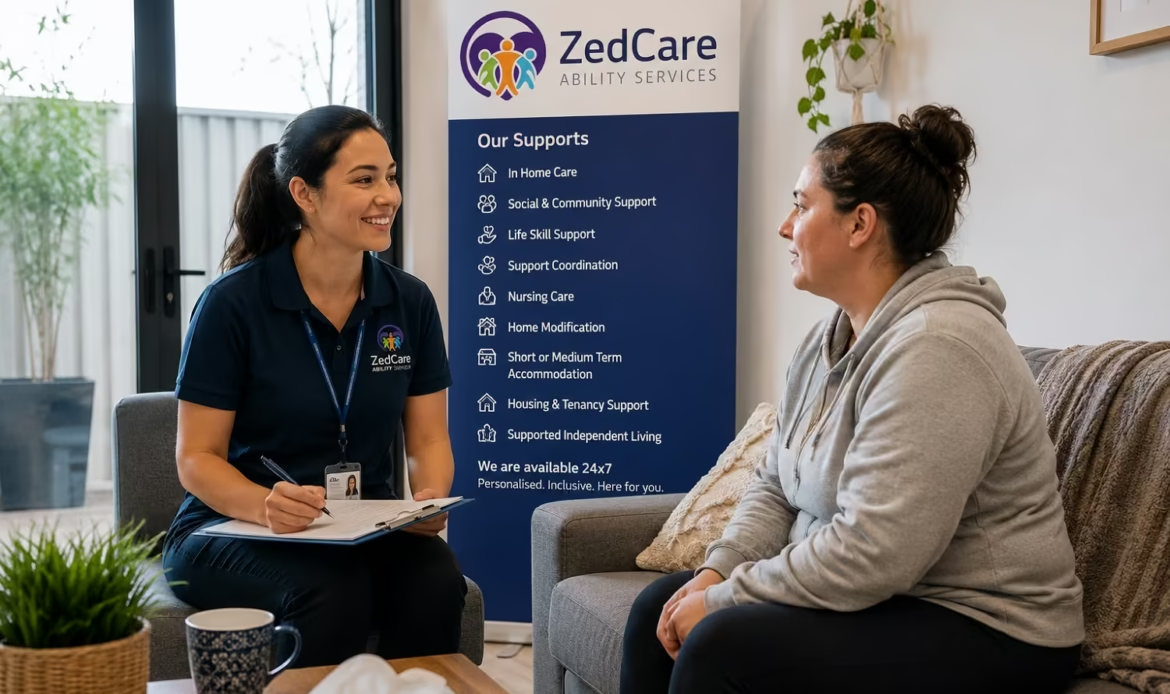
For participants in Sydney who want practical, personalised support, ZedCare Ability may be a useful option to look at. On its official website, the provider says it offers in home care, social and community support, life skill support, support coordination, nursing care, home modification, short- or medium-term accommodation, housing and tenancy support, and supported independent living. The site also says the team is available 24×7 and has a personalised and inclusive approach, which can be very helpful for people who want an NDIS provider in Sydney with a calm and participant focused style. If you or a family member need NDIS services in Sydney and want support that has flexibility, home based help, and community access under one service group, ZedCare Ability may be worth a closer look.